
So your dog’s just been diagnosed with hip dysplasia, or you just welcomed a cute cuddly puppy into your home who is part of a breed genetically predisposed to get hip dysplasia. Either way, we’ve put together a really helpful list of treatment and management options so you know just what to expect down the road!
Before you read on, we’ll recap our in-depth medical look at hip dysplasia. The condition occurs when a dog’s hip joints don’t develop right, causing the hips to partially dislocated and leads to early development of degenerative joint disease. This can cause a dog a lot of pain and can make it really hard to walk around. The cause is almost always genetic, and being overweight can make it a lot worse. And while it tends to affect large breed dogs more frequently, all breeds of dogs are at risk.
 Because the condition is inherited, there’s no cure for hip dysplasia. But the good news is, there are tons of effective ways to treat and manage it! Here are some common treatments and habits that can help your pooch stay happy and healthy:
- Exercise. Regular, low-impact activity such as swimming or leash-walking will help reduce some of the pain in your dog’s joints. It will also lead to increased tendon and muscle strength. TIP: When walking, try to keep your pup away from hard surfaces like concrete or asphalt. It’s hard on the joints and might do more harm than good.
- Physical therapy can really help reduce your dog’s pain and increase his mobility. From massages to hydrotherapy – the use of underwater treadmills – physical therapy can be a great option when done right. Before starting, be sure to talk with your veterinarian who knows your dog’s limitations.
- Joint prescription diets or formulas, recommended by your veterinarian, can help decrease inflammation and promote cartilage healing.
- Give your pooch pain medications, like NSAIDs (non-steroidal anti-inflammatory drugs), to reduce pain, but only as directed by your veterinarian.
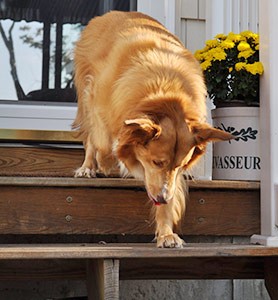
- Create a dog-friendly environment using ramps or easy steps to help your dog into a car, bed, or around the house. Limit your dog’s movement up and down steps. Soft mattresses work well too, and a heated dog bed in cold weather can be great. TIP: Be careful with regular heating pads, as they can get very, very hot and burn your pooch.
- Acupuncture as an ancillary therapy may provide additional benefit in some patients.
- Surgery can help in many cases. Various surgical procedures have been described including juvenile pubic symphysiodesis and total hip replacement (see below). Your veterinarian will advise you of the various surgical procedures, if an option for your pet, and will refer you to a veterinarian who is a board certified specialist in surgery if appropriate.
- Juvenile pubic symphysiodesis. It’s a mouthful, but it describes a short, simple surgical procedure for very young puppies in breeds with a high likelihood of developing hip dysplasia. It is a preventive procedure, often combined with a neuter or spay.
- Total hip replacement. This is an option in dogs with especially severe hip dysplasia and can really increase quality of life if successful.
This list isn’t comprehensive – there are a variety of other procedures and recommendations, and your veterinarian will be the best resource in determining what is right for a dog diagnosed with hip dysplasia. With the right treatment and management, hip dysplasia can often be managed successfully and allow for a healthy, happy life for the dog.
If you have any questions or concerns, you should always visit or call your veterinarian – they are your best resource to ensure the health and well-being of your pets.